• The Survivors Club: The Secrets and Science that Could Save Your LifeThe Survivors Club: The Secrets and Science that Could Save Your Life by Ben Sherwood

    My rating: 2 of 5 stars

    I really liked the first few chapters. In fact, I couldn’t put it down. I spent all of yesterday reading this book. I have been drawn to stories of survival and have read a few books about people who have survived harrowing experiences (One of my favorites being “Dead Lucky” by Lincoln Hall).

    However, I got to the chapter on faith and was completely turned off. According to the author and his research, faith in God is one of the determining factors on whether or not you survive something. His examples were very, very Christian-centric and that really bothered me. I decided halfway through this chapter that I didn’t want to finish the book. However, I did take his “survivor profile.” Ironically, I have the survivor personality of “Believer.” ha! And I suppose this is true. I do believe in something greater than ourselves and have drawn upon this my entire life. When I was younger I viewed this as God. Now that I’m older I have a more universal view of it. I lean more toward Zen Buddhism in my belief at this stage in my life and what I used to call “God” I now see as something bigger and more universal.

    Regardless if my beliefs, The question that kept running through my mind as I read this was, “who cares?” Why should I spend my life worrying about whether I will survive a horrifying experience? Is it even important? I find it much more liberating to experience life as it comes and deal with situations as they arise than to spend time worrying about whether I will get impaled by a knitting needle, or attacked by a mountain lion. Or even getting in a car wreck, for that matter. My thought is that if it is my time to die than so be it. Death is a part of life. There is no shame in dying if it is your time.

    My thoughts circle around to Doug and his death. He didn’t survive cancer. I read about and personally know cancer survivors and I think it’s really awesome and amazing that they are survivors of such a horrible disease. But thier stories also make me feel a little bit bad too. Doug died. He fought a good fight but it wasn’t enough. The doctors did the best they could but it wasn’t enough. I’ve come to realize that it’s o.k. It was his time to die and that is o.k.

    Our culture puts so much emphasis on the survivors (maybe it isn’t just our culture. Maybe it’s just human nature). It’s like you are a better human being because you survive cancer, or a ship wreck, or a plane crash or whatever. There is something to be said for just accepting that death is also a part of living and there is some bravery in facing and accepting death.

    I think Etty Hillesum is an excellent example of this kind of bravery. She died in the Holocaust and faced it with grace and courage. If you haven’t read, “An Interrupted Life” you should.
  • Photography Friday: Chinese Gardens

    We had a friend visit from Spokane over the weekend. Actually, at least for Raf, it was a combo work/play kind of weekend. Colonus Publishing is getting a new book out soon and they were working hard on some details.

    It was a really fun weekend. Our friend is a writer/small press owner and we talked a lot about writing. At dinner Sunday he pulled a copy of Howl by Allan Ginsberg out of his inside jacket pocket, mentioning that he was reading it instead of napping. I was impressed. I spent a good deal of time studying the beat poets in my twenties and hadn’t thought bout Howl for many years. It made me want to read it again myself.

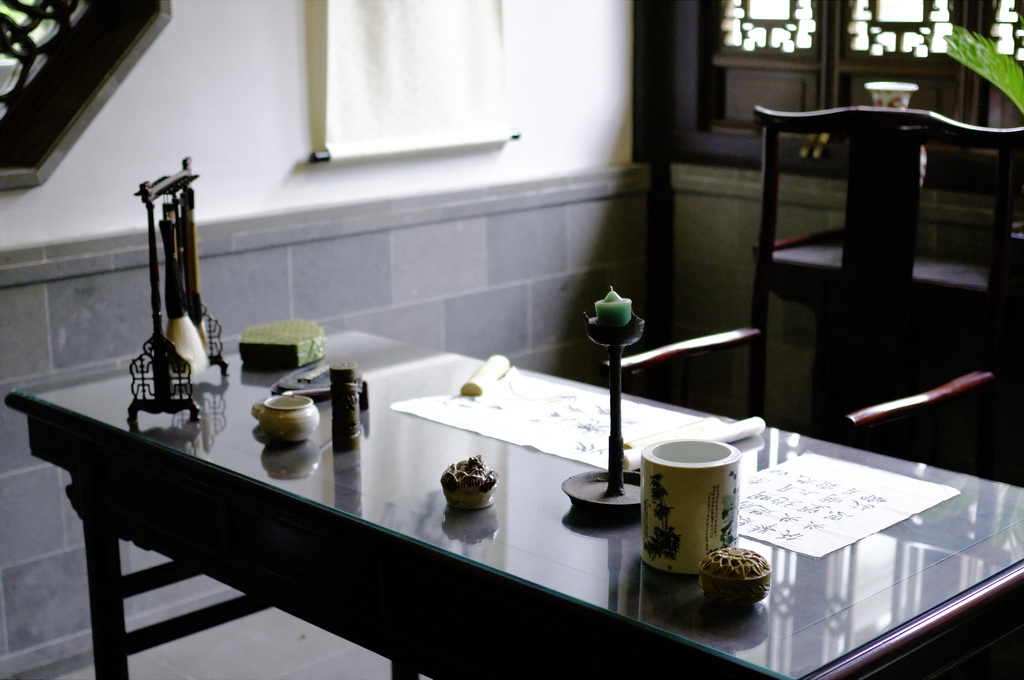
    We went to the Chinese Gardens on Monday and did the whole tourist thing. It was fun. I took the photo above at the tea-house. I wish it was a better photo. The composition isn’t bad but I need to learn a lesson or two about exposure.

    Our friend made a very profound statement that I’ve been thinking about the past few days. We entered a building that had a vignette set up that showed people what an art studio in Medieval China would look like. Our friend liked this very much and exclaimed, “Creative spaces are holy places.” I couldn’t agree more. But he said it much more succinctly than I did.

    Later on we walked over to Powells and I bought Howl, along with some other poetry books (Billy Collins and Rilke).

  • chromebook

    I bought a Google Chromebook last week. When I mentioned it on Twitter there were a few people who were interested in what I thought about it so here is my review.
    First of all, out of the box it is very easy to use. All you have to do is open it up. It took a minute to log onto my home wireless network (because we have a few layers of security) but other than that, cake. The first thing you do is log into your Google account. If you don’t have an account you are prompted to create one. That’s it. From there you are in.

    At first it was weird to do everything within the browser. I use Chrome for everything so I was pretty familiar with how it works. But, still, strange to be browser-bound. I’ve gotten used to it though. I have installed several really great apps from the Chrome Web Store. Almost everything you would need for a netbook is there, and more.

    chrombookI like the keyboard. The keys are larger than on normal keyboards and there are keys specifically designed for tasks one does on the internet. For example there is a key that opens up a new tab, there’s a key that acts as a “back” button, etc. The trackpad is big, which is really nice.

    There are lots of ports that should be useful. You can plug in a monitor and it has two USB ports. It has an SD card slot that you can use if you need to upload photos off your card in a pinch.

    You don’t save files to local memory on this. Files are saved in “the cloud.” So if I want to create a document I would use Google Docs (which is totally fine with me as I use Google Docs daily).

    Bottom line: I really like it. It does what I need it to and it does it really well. It doesn’t replace my computer and I didn’t buy it for that reason. I bought it so I could have a portable device that I could use for writing and for browsing the web. It’s smaller and lighter than a laptop and it has a nice keyboard. It’s bigger than my iPod, which makes my web surfing experience better. I thought about getting and iPad but the one thing that kept me from that purchase (besides the price) is the fact that it doesn’t have a keyboard.

    It’s gotten terrible reviews and I think some of the concerns are valid. I have links to some of them below. If you are not into Google this is not for you. If you don’t trust “The Cloud” this is not for you. If you expect this to replace your main computer, this is not for you. You won’t be able to do major photo editing or media storage on this. You won’t be able to store your music library on this (you can stream music from the dozens of internet radio station sites, though). Is the price for it too high? Maybe. I don’t know. I paid $500 for it and I feel like it was worth it. It does what I want it to do, and I can share it with my husband or anyone else who wants to use it without any hassle. I don’t have to worry about annoying updates because Google has that covered for me. It came with some free internet via Verizon if I’m not within a wifi connection. So I do think it’s worth the price, personally.

  • Dog Mountain

    My blog’s become a bit stale, I’m afraid. Sorry about that. I’m not in a bloggy, social networky mood lately. I guess I’ve been busy with other things.

    But I do miss my little corner of the web so I thought I would post something today.

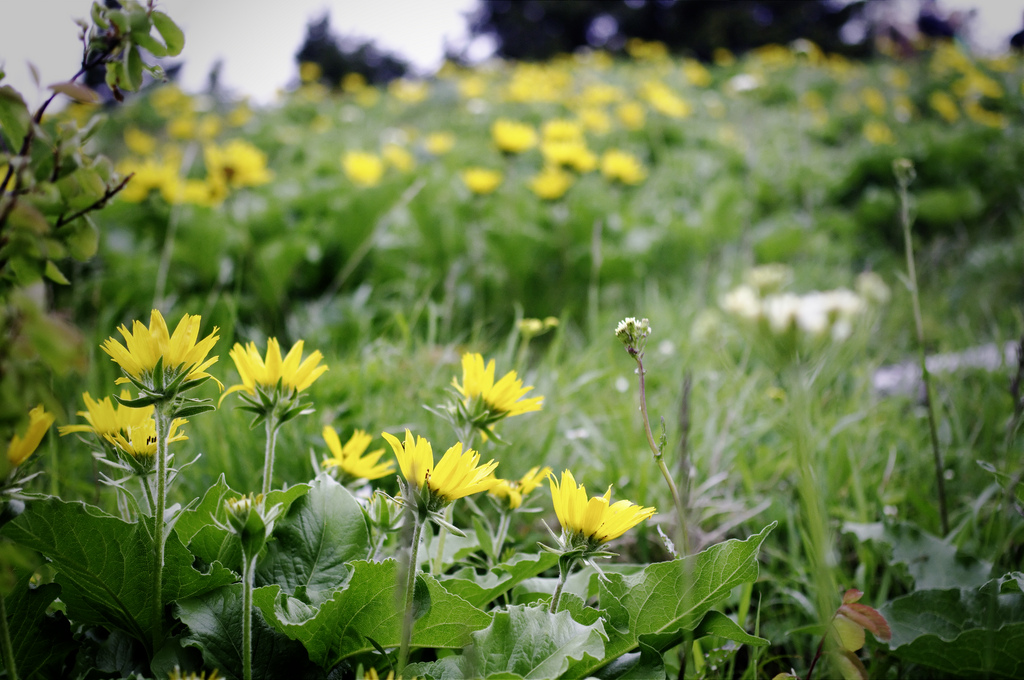
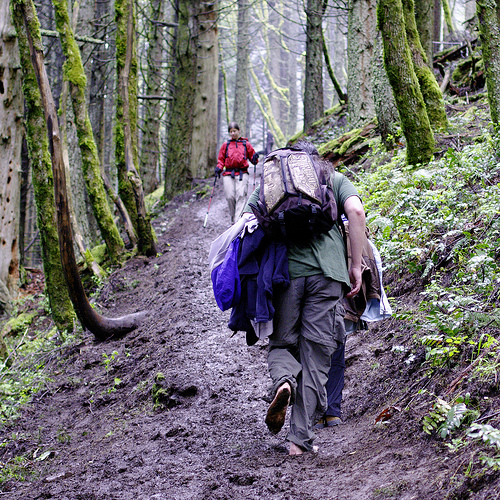
    A couple of weekends ago Raf and I tackled Dog Mountain with some friends. Dog Mountain is a very steep 7 mile hike but totally worth the pain because the views are tremendous. When we went the flowers were starting to bloom in the alpine meadows. It was absolutely gorgeous!

    Here are some pictures from that fun day.

  • Zen Garden
    At the Japanese Gardens in Portland.

    Discipline. I’ve been thinking about that word a lot this past week. We’ve been reading “Zen Mind Beginners Mind” at my meditation group and the first chapter was about posture, specifically the correct posture to use in zazen. This correct use of posture helps make the practice (focusing on the breath) easier. As we talked about this we realized that it takes discipline to practice zazen. So this past week I’ve been really thinking about discipline and what it is and how it can help me in other ways.

    The book talks about the correct way to sit, which is lotus position. There are various reasons why this is that I won’t get into. Unfortunately, I can’t pretzel myself into lotus position.  I want to sit in lotus position but I can’t sit in lotus position.  Thus, I’m going to practice sitting that way for a few minutes everyday with the explicit goal of being able to sit that way for the entirety of my zazan practice. I probably will only be able to do it for a few seconds at a time at first but, eventually with practice, I will reach my goal.

    For some reason (maybe I’m just dense) this has been a revelation to me this week. It is so simple (at least in theory). Daily practice produces results. And it doesn’t matter how you feel about it. You don’t have to feel like doing whatever it is you are trying to accomplish. You don’t even have to be good at it. But if you practice everyday you will eventually be successful. That is discipline.

    Zazen is a daily routine I’ve managed to established. Sometime last year I decided that sitting and breathing everyday would be a priority. If I can’t fit anything else into my day I will fit in meditation for at the very least 10 minutes. This practice  has helped me tremendously in the past year.  I can’t explain how it works but it does. The days that start with meditation are, generally, better days. I find that I am more mindful. Thus, if I want to be better at being more mindful I need to get my ass on the cushion every day for at least 10 minutes. Is it hard to do this? yes it is. The practice itself is not hard. It’s actually the easiest thing I’ve ever done. It’s just sitting and breathing. But getting to the cushion can be very difficult. I can talk myself out of zazen very easily. There is always something else to do.

    Logically, it is very simple and it is logic that can be applied to many areas of my life. This is the part that is the big revelation.

    For example, I haven’t been practicing the ukulele. My excuse has been that I don’t have time. In all honesty, it’s a good excuse because I really have little time left at the end of the day when all is said and done. However, I want to be able to play the ukulele in my story times next fall and I’m not going to be good enough to do this if I don’t practice. Thus, I have to fit some time into my day to practice. If I don’t practice I don’t get better. So this morning I tucked in a quick 10 minute practice session in between my shower and breakfast. yay!

    Raf and I were talking about Karma the other day and he mentioned the metaphor of the apple tree used by Jack Kornfield in “Buddhism for Beginners.” Karma is not a mystical idea. It is really very simple. It is like planting an apple seed. If you plant an apple seed you will get an apple tree. And not only will you get an apple tree you will also get lots of apples AND more apple seeds. I suppose action is like the seed. And the effect of that action is the tree (and the effect of an action can go on and on, like the apple tree – but that’s a blog post for another time).  This idea of discipline is similar and just as specific. Daily practice is the seed. Daily practice produces skill (the apple tree). Simple.